
English to Tamil Translation: 50 Daily Use Sentences for Real Conversations
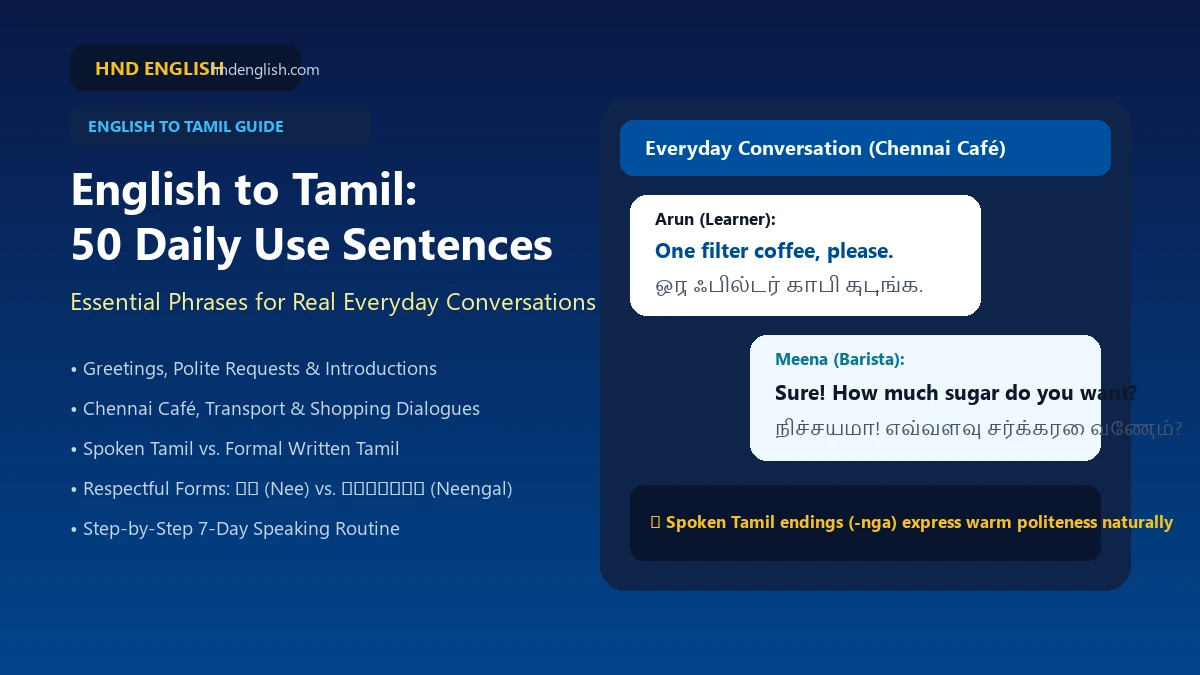
Imagine visiting a small café in Chennai. You know what you want to order, and the English words are simple enough: "One coffee, please."
But if the person serving you speaks Tamil, you may suddenly wonder how to say it naturally. You could look up each English word separately. Yet the result might not sound like something people would actually say.
That's a common problem with translation. Knowing the meaning of individual words is not the same as knowing how to use them in a real conversation.
When learning English to Tamil, the most useful starting point is often a collection of practical expressions that you can hear, understand, and use in everyday situations.
This guide introduces 50 daily-use English sentences and expressions with Tamil meanings, along with explanations of how people speak in shops, classrooms, offices, restaurants, and other familiar settings across Tamil Nadu. You'll also learn when to use respectful language, why written and spoken Tamil sometimes differ, and how to avoid literal translations that sound unnatural.
Key Benefit: Whether you're an English speaker learning Tamil or a Tamil speaker learning the meaning of everyday English expressions, the goal is the same: communicate more naturally with confidence.
Quick Start: Five Essential English-to-Tamil Expressions
If you only have two minutes today, start with these five fundamental phrases that you can use immediately in conversation:
| English | Tamil (தமிழ்) | Simple Pronunciation |
|---|---|---|
| Hello | வணக்கம் | Vanakkam |
| Thank you | நன்றி | Nandri |
| How are you? | எப்படி இருக்கீங்க? | Eppadi irukkeenga? |
| I don't understand | எனக்குப் புரியவில்லை | Enakku puriyavillai |
| Please say it again | மறுபடியும் சொல்லுங்க | Marubadiyum sollunga |
A greeting does more than begin a conversation. It helps establish a friendly tone and shows respect for the person you're speaking with. In Tamil, the form you choose can also depend on the relationship between speakers.
| No. | English Sentence | Tamil Translation (தமிழ்) |
|---|---|---|
| 1 | Hello | வணக்கம் |
| 2 | How are you? | எப்படி இருக்கீங்க? |
| 3 | I am fine | நான் நல்லா இருக்கேன் |
| 4 | Thank you | நன்றி |
| 5 | Thank you very much | ரொம்ப நன்றி |
| 6 | Excuse me / Sorry | மன்னிக்கவும் |
| 7 | Please come in | உள்ளே வாங்க |
| 8 | See you later | அப்புறம் பார்க்கலாம் |
A Short Conversation: Arun & Meena
Arun:
Meena:
Arun:
Meena:
Why "How Are You?" Has Different Tamil Forms
You may have seen: நீங்கள் எப்படி இருக்கிறீர்கள்? (Neengal eppadi irukkireerkal?). This is a standard written or more formal textbook form. In everyday conversation, you will usually hear: எப்படி இருக்கீங்க? (Eppadi irukkeenga?). Both are understandable, but the tone and register differ. The second reflects common conversational Tamil in Chennai and Tamil Nadu.
Imagine meeting a new classmate or colleague in Chennai. You don't need a long speech; a few clear sentences are enough to introduce yourself comfortably.
| No. | English Sentence | Tamil Translation (தமிழ்) |
|---|---|---|
| 9 | What is your name? | உங்க பெயர் என்ன? |
| 10 | My name is Priya | என் பெயர் பிரியா |
| 11 | Where are you from? | நீங்க எந்த ஊரு? |
| 12 | I'm from Chennai | நான் சென்னையிலிருந்து வர்றேன் |
| 13 | I live here | நான் இங்கே இருக்கேன் |
| 14 | I am learning Tamil | நான் தமிழ் கத்துக்கிட்டு இருக்கேன் |
| 15 | I speak a little Tamil | எனக்குக் கொஞ்சம் தமிழ் பேசத் தெரியும் |
| 16 | Nice to meet you | உங்களைச் சந்தித்ததில் மகிழ்ச்சி |
These examples mix natural spoken and more standard expressions where appropriate. For instance, நீங்க எந்த ஊரு? is a colloquial, friendly way to ask where someone comes from. A more formal textbook question would be: நீங்கள் எந்த ஊரைச் சேர்ந்தவர்?
A Natural Introduction: Priya & Karthik
Priya:
Karthik:
Priya:
Karthik:
Priya:
You can see that the conversation relies on a handful of reusable patterns. Change the name, city, or language, and you can build a new introduction right away.
Questions help you move beyond greetings. They let you ask for information, clarify unfamiliar words, and participate in everyday situations.
| No. | English Sentence | Tamil Translation (தமிழ்) |
|---|---|---|
| 17 | What is this? | இது என்ன? |
| 18 | Where is it? | அது எங்கே இருக்கு? |
| 19 | How much is this? | இது எவ்வளவு? |
| 20 | What happened? | என்ன ஆச்சு? |
| 21 | Do you speak English? | உங்களுக்கு ஆங்கிலம் பேசத் தெரியுமா? |
| 22 | Can you help me? | எனக்கு உதவி செய்ய முடியுமா? |
| 23 | What does this mean? | இதுக்கு என்ன அர்த்தம்? |
| 24 | Please speak slowly | கொஞ்சம் மெதுவா பேசுங்க |
Learn the Question Words in Tamil
Many Tamil question words begin with distinctive forms (எ- words) that help identify what kind of information is requested:
A Common Beginner Mistake: Word Order in Questions
An English speaker may expect every Tamil question to follow English word order. But Tamil commonly places the main verb near the end of the sentence:
For detailed grammatical patterns, see Michigan State University's Basic Tamil Guide.
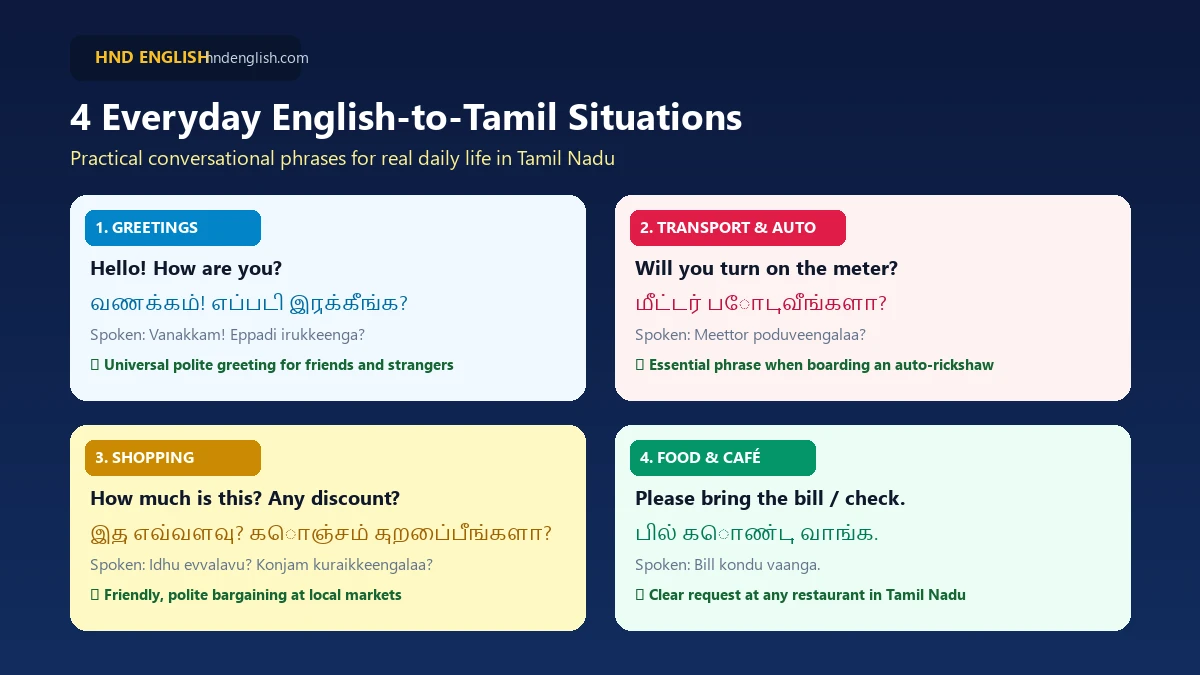
Shopping is one of the easiest places to practice simple Tamil. You may need to ask the price, choose an item, or decide whether you want to buy something.
| No. | English Sentence | Tamil Translation (தமிழ்) |
|---|---|---|
| 25 | I want this | எனக்கு இது வேணும் |
| 26 | I don't want this | எனக்கு இது வேண்டாம் |
| 27 | Is there another colour? | வேற கலர் இருக்கா? |
| 28 | That's too expensive | இது ரொம்ப விலை அதிகம் |
| 29 | Can you reduce the price? | விலையைக் கொஞ்சம் குறைக்க முடியுமா? |
| 30 | I'll take this | நான் இதை வாங்கிக்கிறேன் |
| 31 | Do you accept cards? | கார்டு வாங்குவீங்களா? |
| 32 | Please give me a bag | ஒரு பை கொடுங்க |
Buying a Shirt at a Clothing Store
Customer:
Shopkeeper:
Customer:
Shopkeeper:
Customer:
This exchange demonstrates that everyday Tamil often includes familiar borrowed English words. For example, கலர் (colour) and கார்டு (card) are widely used in colloquial speech across Tamil Nadu.
Imagine visiting a restaurant in Chennai, Coimbatore, or Madurai. You may already know familiar dish names such as idli, dosa, and sambar. But ordering involves more than just naming foods.
| No. | English Sentence | Tamil Translation (தமிழ்) |
|---|---|---|
| 33 | I'm hungry | எனக்குப் பசிக்குது |
| 34 | I'm thirsty | எனக்குத் தாகமா இருக்கு |
| 35 | One coffee, please | ஒரு காபி கொடுங்க |
| 36 | I don't want sugar | எனக்குச் சர்க்கரை வேண்டாம் |
| 37 | Is this spicy? | இது காரமா இருக்கா? |
| 38 | Please bring the bill | பில் கொண்டு வாங்க |
Café Dialogue: Ordering Coffee
Customer:
Server:
Customer:
Server:
Customer:
Notice how the conversation uses short, natural expressions. The goal is not to translate an entire English conversation word for word, but to express the meaning in a way that fits the situation.
Chennai's streets, buses, railway stations, and metro system offer many practical situations for language learning. Even a few expressions can help you ask where to go with ease.
| No. | English Sentence | Tamil Translation (தமிழ்) |
|---|---|---|
| 39 | Where is the bus stop? | பஸ் ஸ்டாப் எங்கே இருக்கு? |
| 40 | Does this bus go to Chennai Central? | இந்த பஸ் சென்னை சென்ட்ரலுக்குப் போகுமா? |
| 41 | Please stop here | இங்கே நிறுத்துங்க |
| 42 | I need to go to the railway station | நான் ரயில் நிலையத்துக்குப் போகணும் |
| 43 | Is it far from here? | இங்கிருந்து ரொம்ப தூரமா? |
| 44 | Which way should I go? | நான் எந்த வழியா போகணும்? |
In an Auto-Rickshaw in Chennai
Passenger:
Driver:
Passenger:
Driver:
Passenger:
Why Context and Verb Endings Matter
In colloquial Tamil, நான் ஸ்டேஷனுக்குப் போகணும் uses the common spoken ending -ணும் (-num) to express necessity or intention. The standard written version uses a different formal auxiliary verb. Understanding these differences will help you understand native speakers much faster.
Even beginners should have a few phrases ready for when a conversation moves too quickly or becomes confusing.
| No. | English Sentence | Tamil Translation (தமிழ்) |
|---|---|---|
| 45 | I don't understand | எனக்குப் புரியவில்லை |
| 46 | I don't know | எனக்குத் தெரியாது |
| 47 | Please repeat that | மறுபடியும் சொல்லுங்க |
| 48 | Please wait a moment | கொஞ்சம் காத்திருங்க |
| 49 | I need help | எனக்கு உதவி வேணும் |
| 50 | Everything is okay | எல்லாம் சரியா இருக்கு |
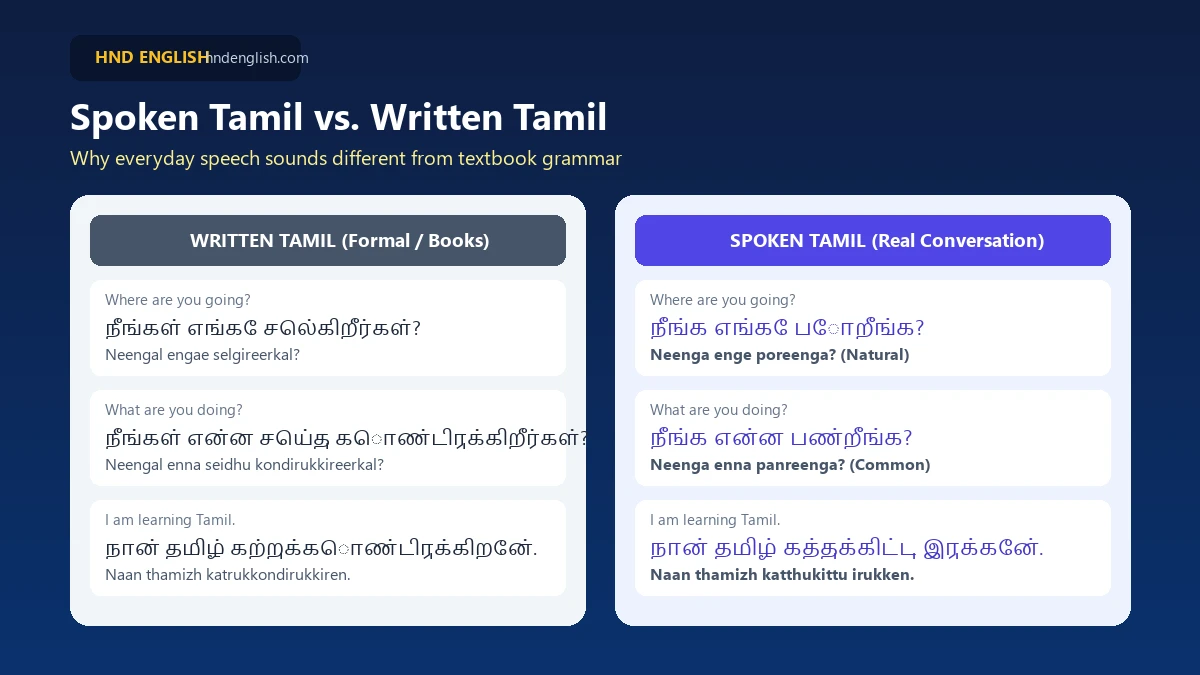
One of the most important things to understand about Tamil is the difference between how the language is commonly written (இலக்கியத் தமிழ்) and how people speak in informal conversation (பேச்சுத் தமிழ்). Tamil has a long literary tradition, and formal written Tamil follows structures that may differ noticeably from everyday speech:
| English Meaning | Standard Written Tamil | Common Spoken Tamil |
|---|---|---|
| How are you? | எப்படி இருக்கிறீர்கள்? | எப்படி இருக்கீங்க? |
| I am fine | நான் நன்றாக இருக்கிறேன் | நான் நல்லா இருக்கேன் |
| I want this | எனக்கு இது வேண்டும் | எனக்கு இது வேணும் |
| Where are you going? | நீங்கள் எங்கே செல்கிறீர்கள்? | நீங்க எங்கே போறீங்க? |
| Please say it again | மீண்டும் சொல்லுங்கள் | மறுபடியும் சொல்லுங்க |
Which Form Should You Learn?
That depends on your purpose. If you're reading books, writing formal documents, or studying Tamil grammar, standard written Tamil is essential. If you're trying to understand conversations in Chennai or speak casually with friends, spoken Tamil is especially useful.
Most learners benefit from recognizing both. This is not simply a difference between correct and incorrect Tamil; it's a difference in language register, context, and usage. For more details on language structure, see HND English — Word Classes in English.
English uses "you" in both formal and informal situations. Tamil makes more visible distinctions:
Used with close friends, younger siblings, and children.
Used with elders, strangers, colleagues, teachers, and in polite society.
Consider the English expression: "Take your time." If you're learning word by word, you might try translating take, your, and time separately. But that would miss the intended meaning completely.
In many contexts, "Take your time" means "There's no need to hurry." A natural Tamil response would be: அவசரப்பட வேண்டாம். (Avasarappada vendaam).
Another Example: "I'm on My Way"
This English expression doesn't mean someone is physically standing on a road. It usually means they're travelling toward a destination. A suitable Tamil translation is: நான் வந்துகிட்டு இருக்கேன். (Naan vandhukittu irukken — I'm coming).
Three Common Translation Problems
English commonly uses Subject–Verb–Object (SVO) order, while Tamil commonly uses Subject–Object–Verb (SOV) order. Placing verbs where they belong in English makes Tamil sound awkward.
Choosing the wrong pronoun or verb ending can unintentionally sound rude or distant. Always align your pronouns with the speaker's relationship.
English idioms cannot be translated word for word. Always translate the communicative intention rather than the literal dictionary words.
A good practice routine doesn't require hours of studying every day. It requires attention to a few useful habits:
Instead of memorizing only the word water, learn: "கொஞ்சம் தண்ணீர் கொடுங்க" (Please give me some water). Then swap nouns: "கொஞ்சம் காபி கொடுங்க" (Please give me some coffee).
Listen to everyday conversations, authentic audio, and educational videos. Notice how native speakers shorten expressions and pronounce spoken endings.
Record the phrase, its Tamil meaning, and the exact situation where you'll use it. Group expressions by situation rather than alphabetically.
When a translation seems strange, don't assume the words are wrong. Check the tone, formality, and grammar with a competent Tamil speaker.
| English Phrase | Tamil Meaning | Situation |
|---|---|---|
| How much is this? | இது எவ்வளவு? | Shopping |
| Where is the bus stop? | பஸ் ஸ்டாப் எங்கே இருக்கு? | Travel & directions |
| Please repeat that | மறுபடியும் சொல்லுங்க | Learning & conversation |
| Thank you very much | ரொம்ப நன்றி | Polite conversation |
You don't need to memorize all 50 sentences in one sitting. Follow this simple 7-day routine:
| Day | Topic | Daily Speaking Goal |
|---|---|---|
| Monday | Greetings | Begin and end a short conversation naturally (Sentences 1–8) |
| Tuesday | Introductions | Introduce yourself and ask someone where they are from (Sentences 9–16) |
| Wednesday | Questions | Ask for information and clarify unfamiliar words (Sentences 17–24) |
| Thursday | Shopping | Ask about prices, colors, and bag requests (Sentences 25–32) |
| Friday | Food & Drinks | Order coffee, request food without sugar, and ask for the bill (Sentences 33–38) |
| Saturday | Transport | Direct an auto driver and ask for bus stops (Sentences 39–44) |
| Sunday | Review | Review all expressions and speak them aloud without looking at translations |
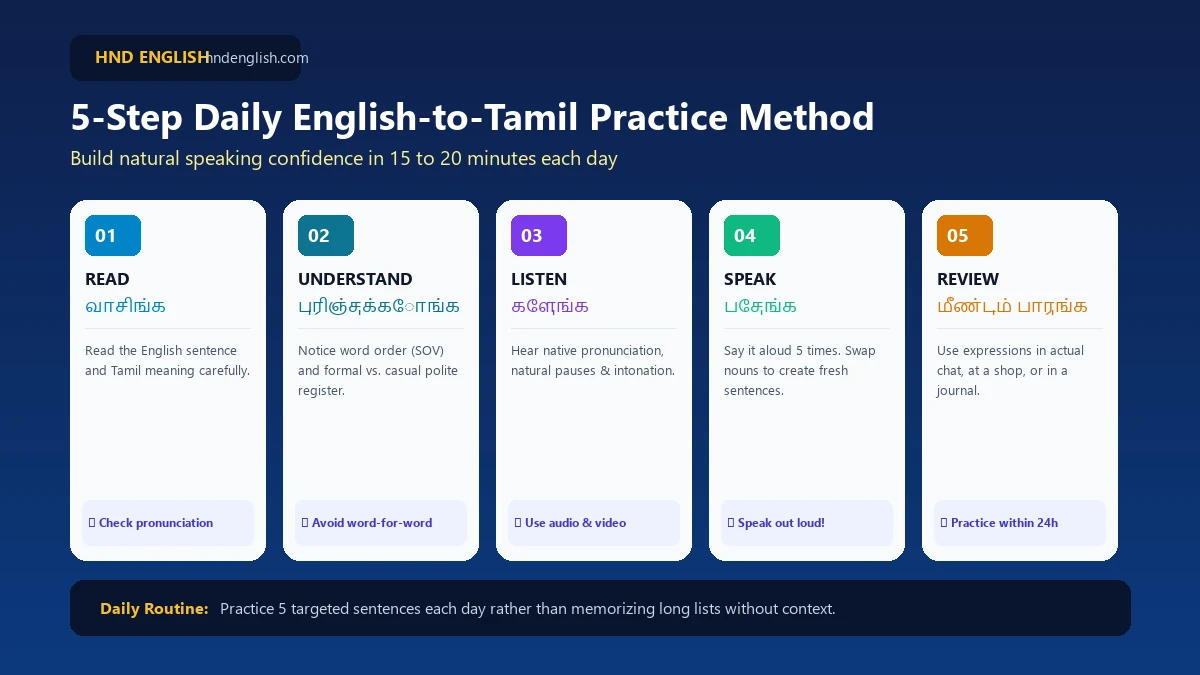
Practice Checklist: Before Finishing Each Session
- ✓ Read the English expression and its Tamil meaning.
- ✓ Understand the intended communicative meaning and tone.
- ✓ Say the Tamil translation aloud 5 times.
- ✓ Compare it with natural spoken Tamil forms.
- ✓ Use the phrase in a realistic sentence within 24 hours.
Test what you've learned! Translate the following 8 English sentences into natural spoken Tamil:
- What is your name?
- I don't understand.
- How much is this?
- Please stop here.
- I want a coffee.
- Where are you going?
- Please say it again.
- I am learning Tamil.
👉 Click here to reveal the answers
| English Sentence | Tamil Translation (தமிழ்) |
|---|---|
| What is your name? | உங்க பெயர் என்ன? |
| I don't understand | எனக்குப் புரியவில்லை |
| How much is this? | இது எவ்வளவு? |
| Please stop here | இங்கே நிறுத்துங்க |
| I want a coffee | எனக்கு ஒரு காபி வேணும் |
| Where are you going? | நீங்க எங்கே போறீங்க? |
| Please say it again | மறுபடியும் சொல்லுங்க |
| I am learning Tamil | நான் தமிழ் கத்துக்கிட்டு இருக்கேன் |
Recommended Video: English Sentences With Tamil Meanings
Watch this lesson by English Pesalam covering 100 common English sentences explained through Tamil:
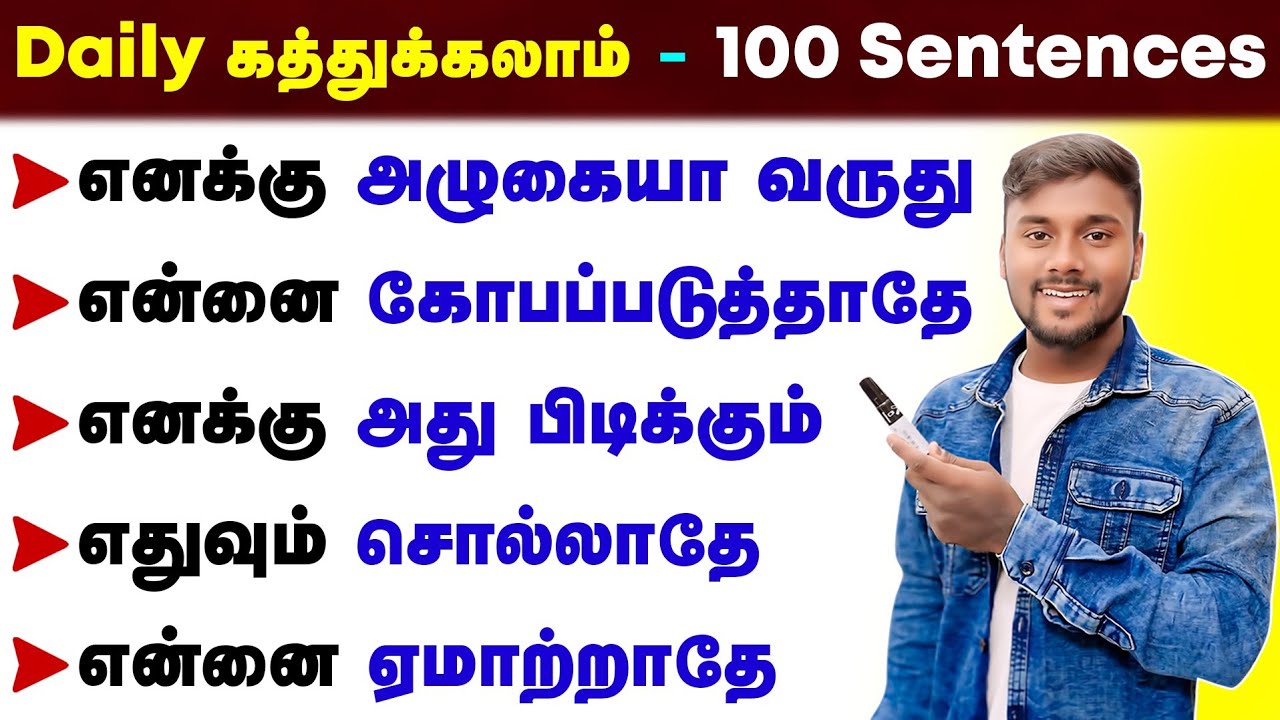
Watch a small section, pause, and try creating your own variations. For example, after learning "I want a coffee," swap the noun to "tea" or "water" to turn memorized sentences into flexible patterns.
Frequently Asked Questions
How can I translate English to Tamil naturally?
Start by understanding the complete meaning of the English sentence. Then choose a Tamil expression appropriate to the situation, level of formality, and whether you're speaking or writing.
What is the difference between spoken Tamil and written Tamil?
Written Tamil generally follows more formal grammatical conventions. Everyday spoken Tamil often uses different verb endings, shortened forms, and familiar vocabulary. Both are important for different situations.
Is Tamil spoken in Chennai different from Tamil spoken elsewhere?
Yes. Vocabulary, pronunciation, and colloquial expressions can vary across Tamil-speaking communities. The standard written language provides shared foundations, while everyday speech reflects regional usage.
How do you say hello in Tamil?
A widely understood greeting is வணக்கம் (Vanakkam). People also use other expressions depending on context, relationship, and community.
How do you say thank you in Tamil?
நன்றி (Nandri) means thank you. ரொம்ப நன்றி (Romba nandri) is a common conversational way of saying thank you very much.
Can I use Google Translate for English to Tamil?
Yes. Google Translate supports English and Tamil text translation. However, it's important to review idioms, formal language, regional expressions, and longer sentences for accuracy and naturalness.
How many Tamil phrases should I learn each day?
There's no fixed number. Practicing five meaningful phrases regularly can be a useful starting point. Focus on understanding and using them rather than memorizing large lists without context.
Should beginners learn Tamil script or English-letter pronunciation first?
Both can help. Approximate English-letter pronunciation is convenient for getting started, but learning the Tamil script and listening to accurate audio will improve long-term understanding.
Why do some Tamil phrases have more than one translation?
Different translations may reflect formality, dialect, speaker intention, or context. A phrase that's natural in a casual conversation may differ from the wording used in a formal written document.
Final Thoughts: Learn Tamil Through Real Conversations
Learning English to Tamil becomes much easier when you stop treating translation as a word-replacement exercise. A simple greeting, a question at a shop, or a short conversation with a new colleague can teach you more about practical communication than a long list of disconnected vocabulary.
Start with expressions you can actually use. Understand when they're appropriate. Pay attention to how spoken Tamil differs from written Tamil. And gradually combine familiar phrases into longer conversations. You don't need to know everything before you begin—even a few useful sentences can help you communicate more confidently and understand the language around you.
References and Further Learning
Save Complete Educational Notes as PDF
Download a clean, printer-friendly formatted PDF of this note for offline revision.
Found this study material helpful?
Rate our website service and free notes repository on Google Reviews!
Discussion & Study Inquiries (0)
Ask questions, request missing past papers, or share revision notes
No comments yet. Be the first student to start the discussion or request past papers!