You're standing at a tea shop in Kochi, and someone asks you a question in Malayalam. You recognize a few familiar words, but you're not entirely sure what the complete sentence means.
You know how to say hello (നമസ്കാരം). You may even know how to thank someone (നന്ദി). But what happens when the conversation continues?
This is where learning a language becomes truly exciting. Knowing individual Malayalam words is useful. Knowing how those words work together in everyday conversations is what helps you communicate naturally and build real connections.
If you're learning English to Malayalam, it's tempting to begin by translating every English word separately. But Malayalam doesn't always follow English sentence structure, and a phrase that sounds perfectly natural in English may need a very different expression in Malayalam.
This guide introduces 50 useful English-to-Malayalam daily use sentences and expressions, organized around real situations such as greetings, introductions, shopping, food, travel, and asking for help. You'll also learn about conversational Malayalam, pronunciation, respectful language, and common translation mistakes to avoid.
🌴 Practical Focus: Whether you live in Kerala, are visiting God's Own Country, or simply want to understand Malayalam better, the goal is practical: learn expressions you can actually hear, understand, and use.
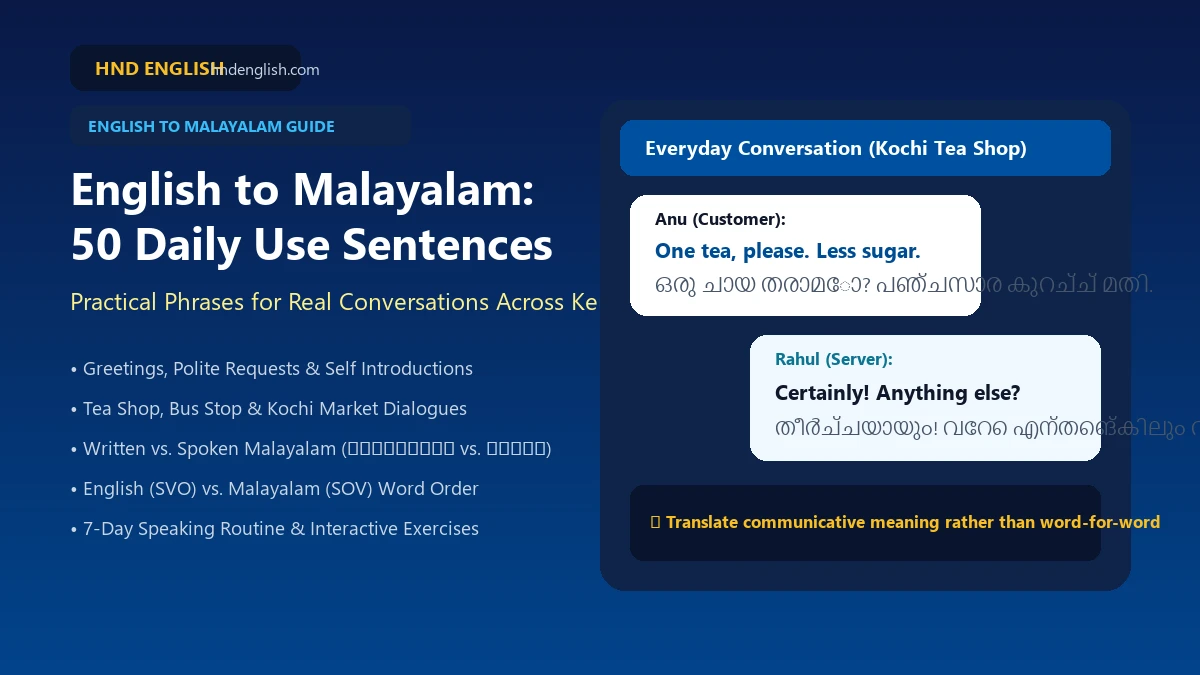
⚡ Quick Start: Essential English-to-Malayalam Phrases
Start with these six fundamental expressions you will hear and use daily in Kerala:
| English Phrase | Malayalam (മലയാളം) | Approximate Pronunciation |
|---|---|---|
| Hello | നമസ്കാരം | Namaskaaram |
| How are you? | സുഖമാണോ? | Sukhamaano? |
| I'm fine | സുഖമാണ് | Sukhamaanu |
| Thank you | നന്ദി | Nanni |
| Sorry / Excuse me | ക്ഷമിക്കണം | Kshamikkanam |
| I don't understand | എനിക്ക് മനസ്സിലായില്ല | Enikku manassilaayilla |
Greetings are a natural starting point because you can use them in many situations. But the best greeting depends on the relationship between speakers and the social context.
| No. | English Sentence | Malayalam Translation (മലയാളം) |
|---|---|---|
| 1 | Hello | നമസ്കാരം |
| 2 | How are you? | സുഖമാണോ? |
| 3 | I'm fine | സുഖമാണ് |
| 4 | Thank you | നന്ദി |
| 5 | Thank you very much | വളരെ നന്ദി |
| 6 | Sorry / Excuse me | ക്ഷമിക്കണം |
| 7 | Welcome | സ്വാഗതം |
| 8 | See you later | പിന്നെ കാണാം |
A Short Conversation: Anu & Rahul
Anu:
Rahul:
Anu:
Rahul:
Do People Always Say Namaskaaram?
നമസ്കാരം (Namaskaaram) is a universally recognized and respectful greeting. However, everyday conversations among friends may simply begin with ഹായ് (Hi), asking സുഖമാണോ? (How are you?), or opening with a familiar inquiry. Just like in English, casual exchanges use simpler, friendlier openings than formal business meetings.Imagine meeting a new colleague, classmate, or neighbor in Kerala. You don't need a complicated speech; a few clear expressions will help you introduce yourself with poise.
| No. | English Sentence | Malayalam Translation (മലയാളം) |
|---|---|---|
| 9 | What is your name? | നിങ്ങളുടെ പേര് എന്താണ്? |
| 10 | My name is Anu | എന്റെ പേര് അനു എന്നാണ് |
| 11 | Where are you from? | നിങ്ങൾ എവിടെ നിന്നാണ്? |
| 12 | I am from Kochi | ഞാൻ കൊച്ചിയിൽ നിന്നാണ് |
| 13 | Where do you live? | നിങ്ങൾ എവിടെയാണ് താമസിക്കുന്നത്? |
| 14 | I live in Kerala | ഞാൻ കേരളത്തിലാണ് താമസിക്കുന്നത് |
| 15 | I am learning Malayalam | ഞാൻ മലയാളം പഠിക്കുകയാണ് |
| 16 | I know a little Malayalam | എനിക്ക് കുറച്ച് മലയാളം അറിയാം |
An Introduction at College (Student A & Arun)
Student A:
Arun:
Student A:
Arun:
Student A:
Instead of memorizing completely new sentences each time, swap one meaningful part (e.g. replace തൃശ്ശൂർ with കൊച്ചി, കോഴിക്കോട്, or your hometown).
Once you can introduce yourself, the next step is asking basic questions. These expressions let you request information and clarify unfamiliar words.
| No. | English Sentence | Malayalam Translation (മലയാളം) |
|---|---|---|
| 17 | What is this? | ഇത് എന്താണ്? |
| 18 | Where is it? | അത് എവിടെയാണ്? |
| 19 | Who is that? | അത് ആരാണ്? |
| 20 | What happened? | എന്താണ് സംഭവിച്ചത്? |
| 21 | Do you speak English? | നിങ്ങൾ ഇംഗ്ലീഷ് സംസാരിക്കുമോ? |
| 22 | Can you help me? | നിങ്ങൾക്ക് എന്നെ സഹായിക്കാമോ? |
| 23 | Please say that again | ഒന്നുകൂടി പറയാമോ? |
| 24 | Please speak slowly | ദയവായി പതുക്കെ പറയൂ |
Useful Malayalam Question Words
Mastering these core question stems makes recognizing inquiries effortless:
Imagine visiting a local shop in Kerala. You want to know the price, ask for an item, or see if another size or color is available. Short, polite expressions work wonders:
| No. | English Sentence | Malayalam Translation (മലയാളം) |
|---|---|---|
| 25 | How much is this? | ഇതിന് എത്ര വിലയാണ്? |
| 26 | I want this | എനിക്ക് ഇത് വേണം |
| 27 | I don't want this | എനിക്ക് ഇത് വേണ്ട |
| 28 | Is there another one? | വേറെ ഒന്ന് ഉണ്ടോ? |
| 29 | This is expensive | ഇതിന് വില കൂടുതലാണ് |
| 30 | Can you reduce the price? | വില കുറയ്ക്കാമോ? |
| 31 | I'll take this | ഞാൻ ഇത് വാങ്ങാം |
| 32 | Please give me a bag | ഒരു സഞ്ചി തരാമോ? |
At a Local Shop
Customer:
Shopkeeper:
Customer:
Shopkeeper:
Customer:
Kerala has many iconic dining settings, from small tea stalls (ചായക്കട) to family restaurants. Learning a few practical requests makes everyday ordering enjoyable:
| No. | English Sentence | Malayalam Translation (മലയാളം) |
|---|---|---|
| 33 | I'm hungry | എനിക്ക് വിശക്കുന്നു |
| 34 | I'm thirsty | എനിക്ക് ദാഹിക്കുന്നു |
| 35 | I need water | എനിക്ക് വെള്ളം വേണം |
| 36 | One tea, please | ഒരു ചായ തരാമോ? |
| 37 | Is this spicy? | ഇതിന് എരിവുണ്ടോ? |
| 38 | The bill, please | ബിൽ തരാമോ? |
At a Tea Shop (ചായക്കട)
Customer:
Server:
Customer:
Server:
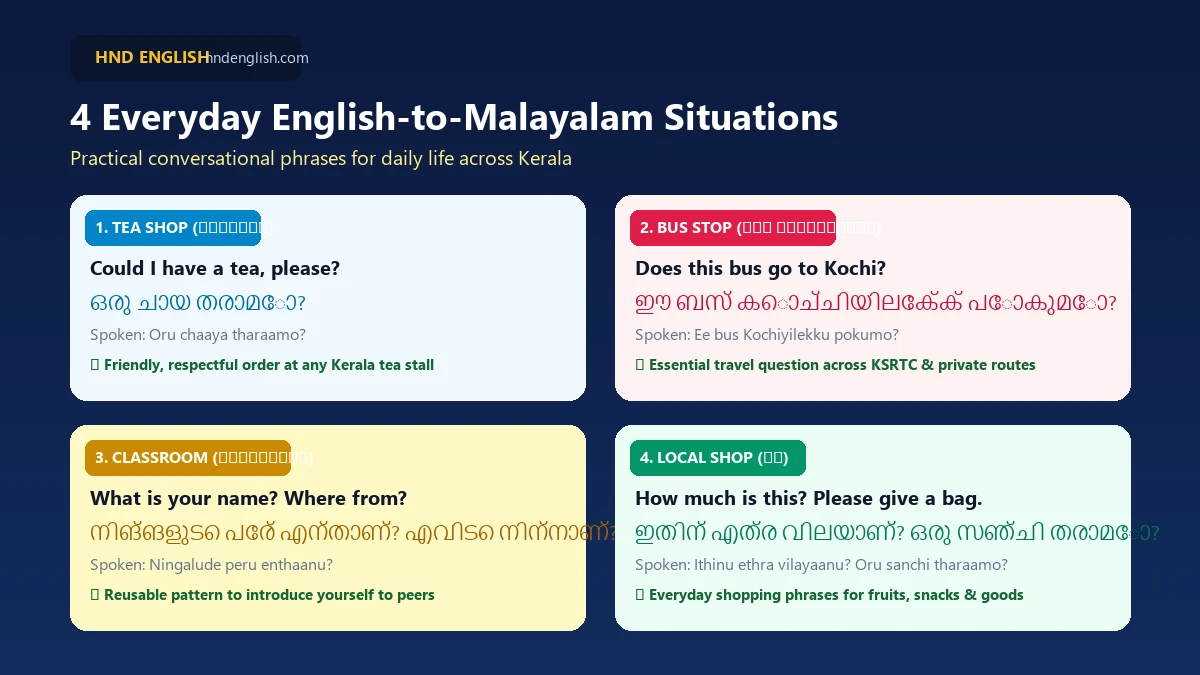
Travelling across Kerala's towns and transit hubs provides immediate reasons to practice Malayalam. You may need to ask about bus stops, boat jetties, or railway stations:
| No. | English Sentence | Malayalam Translation (മലയാളം) |
|---|---|---|
| 39 | Where is the bus stop? | ബസ് സ്റ്റോപ്പ് എവിടെയാണ്? |
| 40 | Does this bus go to Kochi? | ഈ ബസ് കൊച്ചിയിലേക്ക് പോകുമോ? |
| 41 | Please stop here | ഇവിടെ നിർത്താമോ? |
| 42 | Where is the railway station? | റെയിൽവേ സ്റ്റേഷൻ എവിടെയാണ്? |
| 43 | Is it far from here? | ഇവിടെ നിന്ന് ദൂരമാണോ? |
| 44 | Which way should I go? | ഞാൻ ഏത് വഴിയാണ് പോകേണ്ടത്? |
Asking for Directions
Traveler:
Local person:
Traveler:
Local person:
Traveler:
Complete the 50-sentence foundation with phrases that help when you need clarification or assistance:
| No. | English Sentence | Malayalam Translation (മലയാളം) |
|---|---|---|
| 45 | I don't know | എനിക്ക് അറിയില്ല |
| 46 | I understand | എനിക്ക് മനസ്സിലായി |
| 47 | Please wait a moment | ഒരു നിമിഷം കാത്തിരിക്കൂ |
| 48 | I need help | എനിക്ക് സഹായം വേണം |
| 49 | Be careful | ശ്രദ്ധിക്കൂ |
| 50 | Everything is fine | എല്ലാം ശരിയാണ് |
One of the biggest grammatical differences is word order. English follows Subject + Verb + Object (SVO), while Malayalam commonly follows Subject + Object + Verb (SOV):
| Grammatical Function | English (SVO) | Malayalam (SOV) |
|---|---|---|
| Subject | I | ഞാൻ (Njaan) |
| Object | a book | ഒരു പുസ്തകം (Oru pusthakam) |
| Verb (Action) | read | വായിക്കുന്നു (Vaayikkunnu) |
Notice that the main verb വായിക്കുന്നു (read) is placed at the very end of the Malayalam sentence. For more academic grammatical resources, see the University of Texas at Austin Malayalam Department.
A common surprise for beginners is that Malayalam spoken on the street often shortens and contracts forms compared to formal textbook prose:
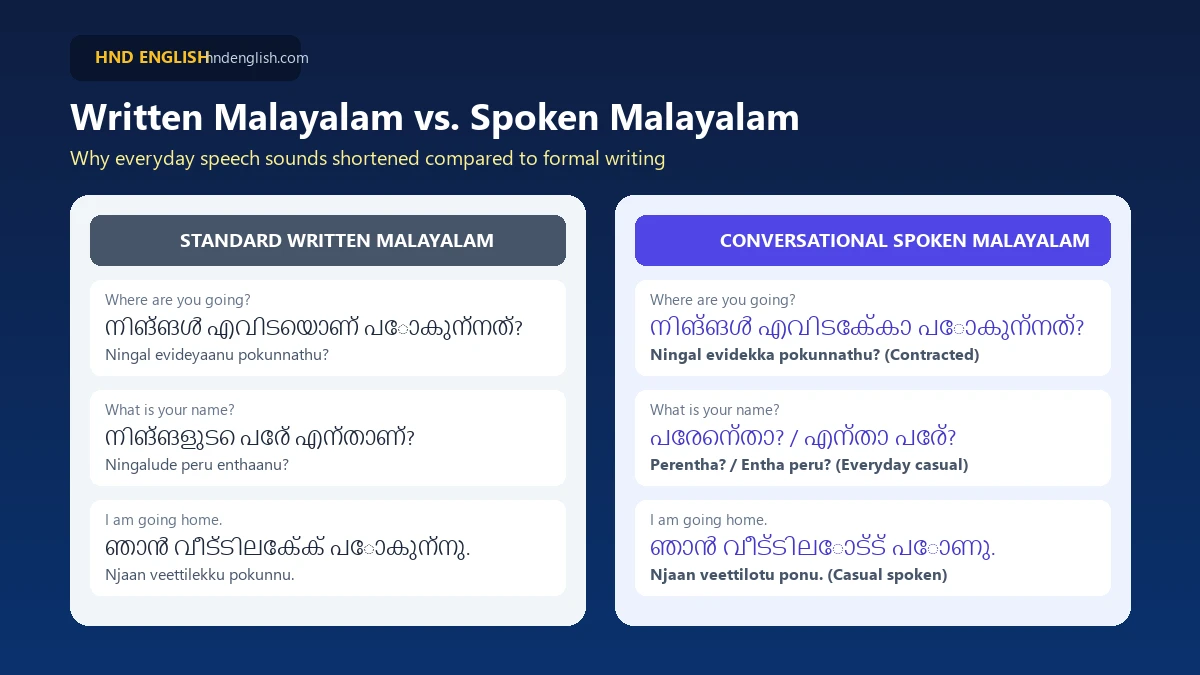
Malayalam contains unique sounds—such as retroflex consonants (ഴ, ള, ണ) and chillu characters—that have no direct English alphabet equivalents. Here is approximate pronunciation for core words:
| Malayalam Word | Approximate Romanization | Meaning |
|---|---|---|
| നമസ്കാരം | Namaskaaram | Hello |
| സുഖമാണോ? | Sukhamaano? | How are you? |
| നന്ദി | Nanni | Thank you |
| ശരി | Shari | Okay |
| വെള്ളം | Vellam | Water |
| മലയാളം | Malayaalam | Malayalam |
For structured audio practice, visit the University of Texas Malayalam Pronunciation Guide.
English idioms cannot be translated word by word. For example, "I'm hungry" is expressed naturally as എനിക്ക് വിശക്കുന്നു (lit. to me hunger occurs).
Malayalam verbs generally belong at the end. Learn full phrase chunks rather than translating English words sequentially.
 HND English
A direct command like വെള്ളം തരൂ (Give water) can sound abrupt. Use കുറച്ച് വെള്ളം തരാമോ? (Could you give some water?) when speaking with servers and elders.
English spellings cannot capture retroflex Malayalam sounds. Listen to authentic native audio alongside written guides.
Context, formality, and dialect vary across Malabar, Central Travancore, and South Kerala. Adapt your phrasing to the situation.
Scenario 1: Meeting Someone
Start with: നമസ്കാരം. Ask: നിങ്ങളുടെ പേര് എന്താണ്? Follow with: നിങ്ങൾ എവിടെ നിന്നാണ്?
Scenario 2: Ordering Tea
Say: ഒരു ചായ തരാമോ? Then close with: നന്ദി.
Scenario 3: Travel Direction
Ask: ബസ് സ്റ്റോപ്പ് എവിടെയാണ്? If unclear, say: ഒന്നുകൂടി പറയാമോ?
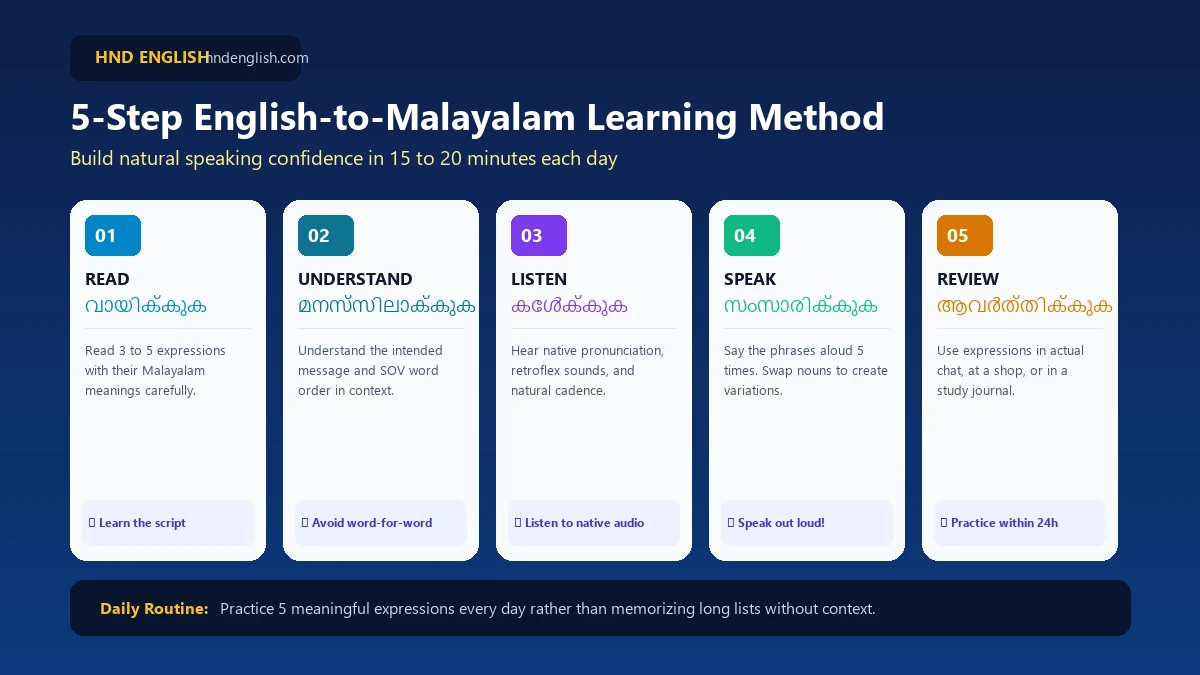
Follow this 5-step daily routine: Read → Understand → Listen → Speak → Review.
| Day | Topic | Daily Practice Goal |
|---|---|---|
| Monday | Greetings | Practice short greeting exchanges (Sentences 1–8) |
| Tuesday | Introductions | Introduce yourself and ask where someone is from (9–16) |
| Wednesday | Questions | Ask for information and clarify unfamiliar words (17–24) |
| Thursday | Shopping | Inquire about prices, bags, and items (25–32) |
| Friday | Food & Drinks | Order tea, water, and ask for the bill (33–38) |
| Saturday | Directions | Ask for bus stops and railway stations (39–44) |
| Sunday | Review | Practice full dialogue exchanges out loud (45–50) |
Translate these 8 common sentences into Malayalam before revealing the answers:
- What is your name?
- I need water.
- How much is this?
- Where is the bus stop?
- I don't understand.
- Please speak slowly.
- See you later.
- Can you help me?
👉 Click here to reveal the answers
| English Sentence | Malayalam Translation (മലയാളം) |
|---|---|
| What is your name? | നിങ്ങളുടെ പേര് എന്താണ്? |
| I need water | എനിക്ക് വെള്ളം വേണം |
| How much is this? | ഇതിന് എത്ര വിലയാണ്? |
| Where is the bus stop? | ബസ് സ്റ്റോപ്പ് എവിടെയാണ്? |
| I don't understand | എനിക്ക് മനസ്സിലായില്ല |
| Please speak slowly | ദയവായി പതുക്കെ പറയൂ |
| See you later | പിന്നെ കാണാം |
| Can you help me? | നിങ്ങൾക്ക് എന്നെ സഹായിക്കാമോ? |
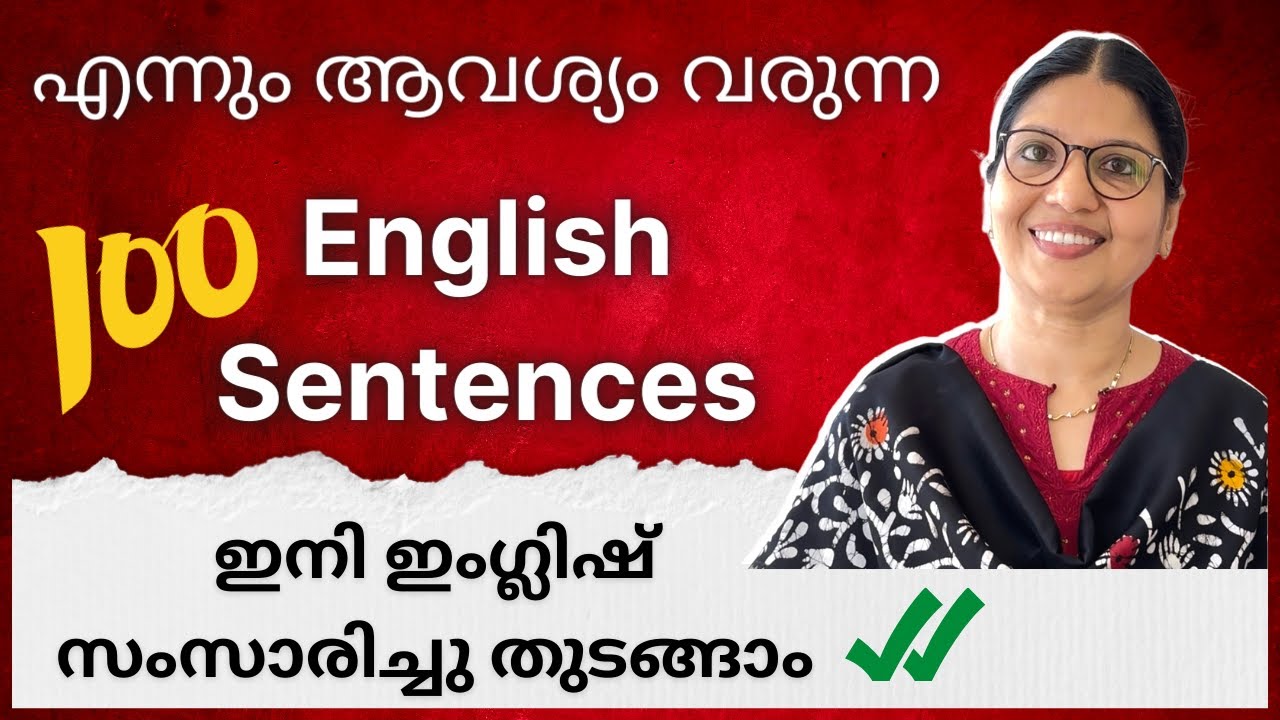
Recommended Video: Everyday English Sentences Explained in Malayalam
Watch this lesson by Everyday English with Sonia featuring 100 basic English sentences explained with Malayalam meanings:
Frequently Asked Questions
How can I translate English to Malayalam naturally?
Start with the meaning of the complete English sentence. Then choose a Malayalam expression that suits the context, grammatical structure, and level of formality.
Is Malayalam difficult for English speakers?
Malayalam has unfamiliar sounds, grammatical structures, and a distinct writing system. However, beginners can start communicating quickly with a small collection of practical daily expressions.
How do you say hello in Malayalam?
നമസ്കാരം (Namaskaaram) is a widely understood respectful greeting. Informal alternatives and borrowed greetings such as "hi" also occur in everyday conversation.
How do you say thank you in Malayalam?
നന്ദി (Nanni) means thank you. വളരെ നന്ദി (Valare nanni) means thank you very much.
What is the difference between spoken and written Malayalam?
Formal written Malayalam and everyday spoken Malayalam can differ in pronunciation, shortened forms, vocabulary, and sentence style.
Does Malayalam have the same word order as English?
Not generally. English commonly uses Subject–Verb–Object order, while Malayalam commonly uses Subject–Object–Verb order.
Can I use Google Translate for English to Malayalam?
Yes, Google Translate offers English-to-Malayalam text translation. However, automatically generated translations should be reviewed for context, grammar, and naturalness.
Should I learn Malayalam script or pronunciation first?
You can begin with useful spoken expressions, but learning the Malayalam script and listening to accurate audio will help you recognize sounds and understand written language more effectively.
How many Malayalam sentences should beginners practice each day?
Practicing five phrases carefully every day is far more effective than trying to memorize long disconnected vocabulary lists.
Are Malayalam expressions the same throughout Kerala?
There are regional variations in pronunciation and colloquial vocabulary between North (Malabar), Central, and South Kerala, while standard written Malayalam provides a shared foundation.
Final Thoughts: Start With Useful Conversations
Learning English-to-Malayalam translation becomes easier when you focus on real communication rather than memorizing isolated vocabulary. A simple greeting, a question at a bus stop, or ordering tea at a local stall can teach you more about practical communication than a long textbook list.