
English to Spanish Translation & Daily Phrases Guide
Advertisement
Spanish is the second most widely spoken native language globally, with over 500 million native speakers across Spain, Latin America, and the United States. Searching for english to spanish or spanish to english is among the highest-volume translation queries on the web. This guide equips learners and professionals with accurate translations, essential verb rules, and everyday colloquialisms.
 Figure 1: Mastering gender agreement and verb conjugations is essential for accurate English-Spanish translation.
Common Spanish Queries Decoded in English
| Spanish Query | English Meaning | Pronunciation | Usage Notes |
|---|---|---|---|
| ¿Cómo estás? | How are you? | CO-mo es-TAHS | Informal greeting (Tú form) |
| ¿Cómo se dice...? | How do you say...? | CO-mo se DEE-seh | Crucial phrase when asking for a translation |
| ¿Qué onda? | What's up? / What's going on? | keh ON-dah | Extremely popular Mexican / Latin American slang |
| Mucho gusto | Nice to meet you (Pleased to meet you) | MOO-cho GOOS-to | Polite introductory phrase |
| Por favor / Gracias | Please / Thank you | por fah-VOR / GRAH-syahs | Everyday courtesies |
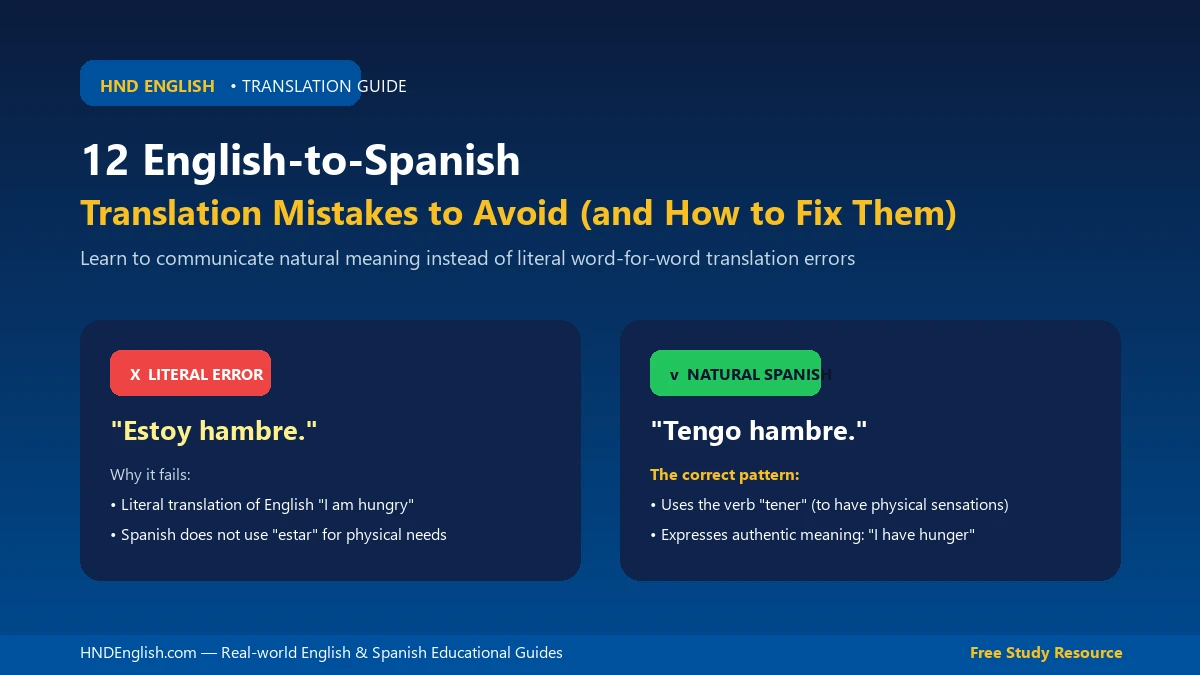
 Figure 2: Distinguishing between Ser (permanent) and Estar (temporary) is key in Spanish translation.
The Crucial "Ser" vs. "Estar" Rule
In English, the single verb "to be" covers all states. In Spanish, two distinct verbs exist:
- Ser: Used for permanent characteristics, identity, profession, and origin (e.g., "Ella es profesora" - She is a teacher).
- Estar: Used for temporary states, locations, and emotions (e.g., "Ella está en la biblioteca" - She is in the library; "Estoy cansado" - I am tired).
Watch Out for False Friends (Falsos Amigos)
Beware of words that look identical but have completely different meanings:
- Embarazada does not mean embarrassed; it means pregnant! (Embarrassed is avergonzado/a).
- Éxito means success, not exit! (Exit is salida).
- Actual means current / present, not actual! (Actual is real).
Advertisement
Save Complete Educational Notes as PDF
Download a clean, printer-friendly formatted PDF of this note for offline revision.
Share with Classmates & Study Groups:
Help fellow students
5.0 / 5.0
Found this study material helpful?
Rate our website service and free notes repository on Google Reviews!


Discussion & Inquiries (0)
Ask questions, request study materials, or join the discussion
Sign In with Google for One-Click Comments